
So, how many satellites are there?
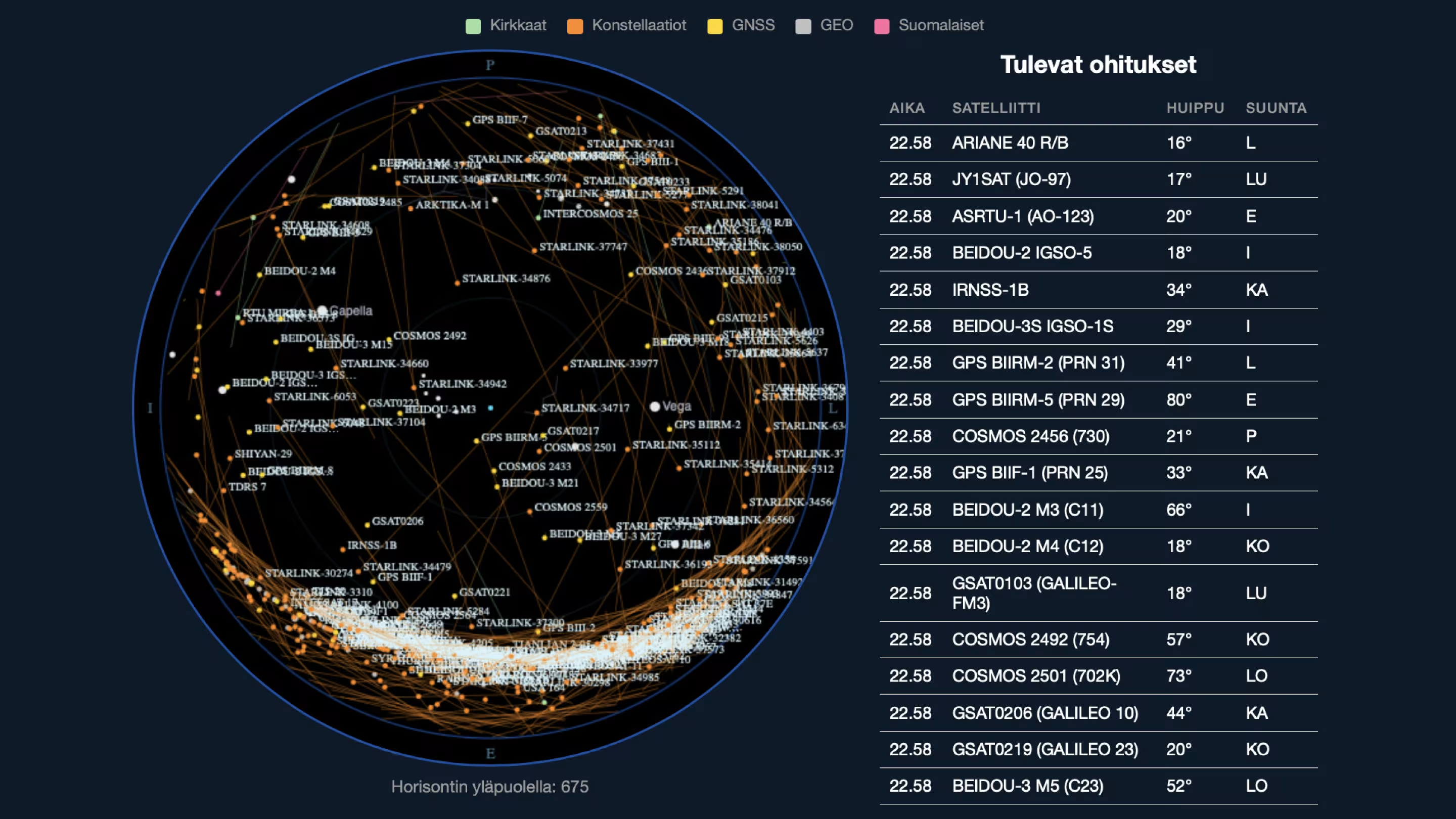
One of the most typical questions related to the space economy is how much we actually use satellites.
The answer is “a lot,” because space is woven very deeply into our everyday lives. Telecommunications, remote sensing, weather, and navigation satellites underpin modern life to such an extent that if the satellites were switched off, our lives would be disrupted immediately. After a couple of days of outage, a state of emergency would probably be declared, because, for example, mobile phone networks would stop working and financial transactions would be severely disrupted.
The problem is that satellites and the activities related to them are largely invisible. Few people look up at the sky, and even if they did, only the brightest satellites can be seen against the lights of the cities.
It may come as a surprise to many that at any given moment there are hundreds of satellites in the sky even over Finland—usually more than 600. Closer to the equator the number is often over a thousand. Even more if the largest pieces of space debris are included.
A huge part of our everyday infrastructure is therefore above us, almost invisible.
That is why we created a small visualization, Satellites over Finland, which shows the satellites currently in the sky. In addition to the default location of Tampere, the user can select Helsinki, Turku, Vaasa, Oulu, Sodankylä, and Ivalo, and follow the movement of the satellites across the sky.
On a clear night one can also try to spot satellites in the real sky, which is why a simplified star map is included as an aid. In that case it is best to turn off all but the brightest satellites, because the sheer number of satellites otherwise fills the image.
There is also an Finnish-language version of the visualization: Satelliitit Suomen taivaalla.
So, how many satellites orbit Earth? The figure is almost 12,000, and when the largest debris fragments are included, the total reaches roughly 22,200.