
New sounding Meteosat-13 enters service
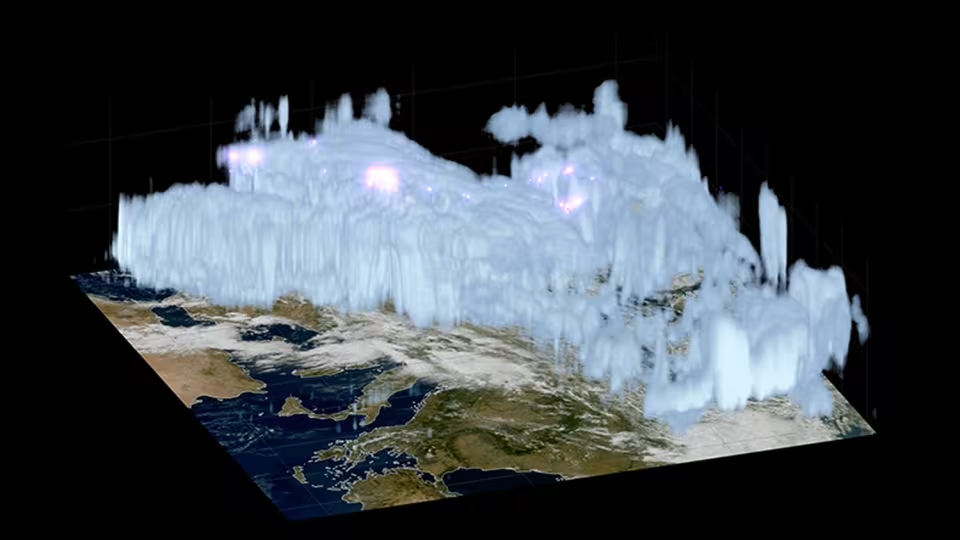
The third generation of European Meteosat satellites is entering service. The Meteosat Third Generation (MTG) project began in the early 2000s with the mapping of needs for a new satellite, and as a result it was decided to build two different types of satellites instead of one: an imaging and a sounding satellite. They were named MTG-I and MTG-S, and their concrete design work started in 2010.
Whereas the earlier Meteosats were cylindrical and spun around their axis, imaging the Earth on each revolution, the third-generation satellites were made three-axis stabilised. They can point their cameras and instruments continuously towards the Earth.
Two satellites were needed because meteorologists wanted precise sounding data in addition to images. Technology has advanced so dramatically that a new type of sounding instrument can form a three-dimensional picture of the atmosphere. When the time dimension is also included — successive observations following one another at short intervals — a four-dimensional understanding is obtained of the temperature, humidity and the amount of trace gases at each altitude.
The first satellite, MTG-I1, was launched in December 2022. After the commissioning phase, when it entered normal operational service in December 2024, it was named Meteosat-12. The sounding satellite MTG-S1 (I stands for imaging or imager and S stands for sounding or sounder) was launched into space in July 2025, and when it officially entered service today it was renamed Meteosat-13.
In the meantime, the second imaging satellite, MTG-I2, was already launched into space on 27 August 2026. The trio will work together and produce precise data on the Earth every 2.5 minutes.
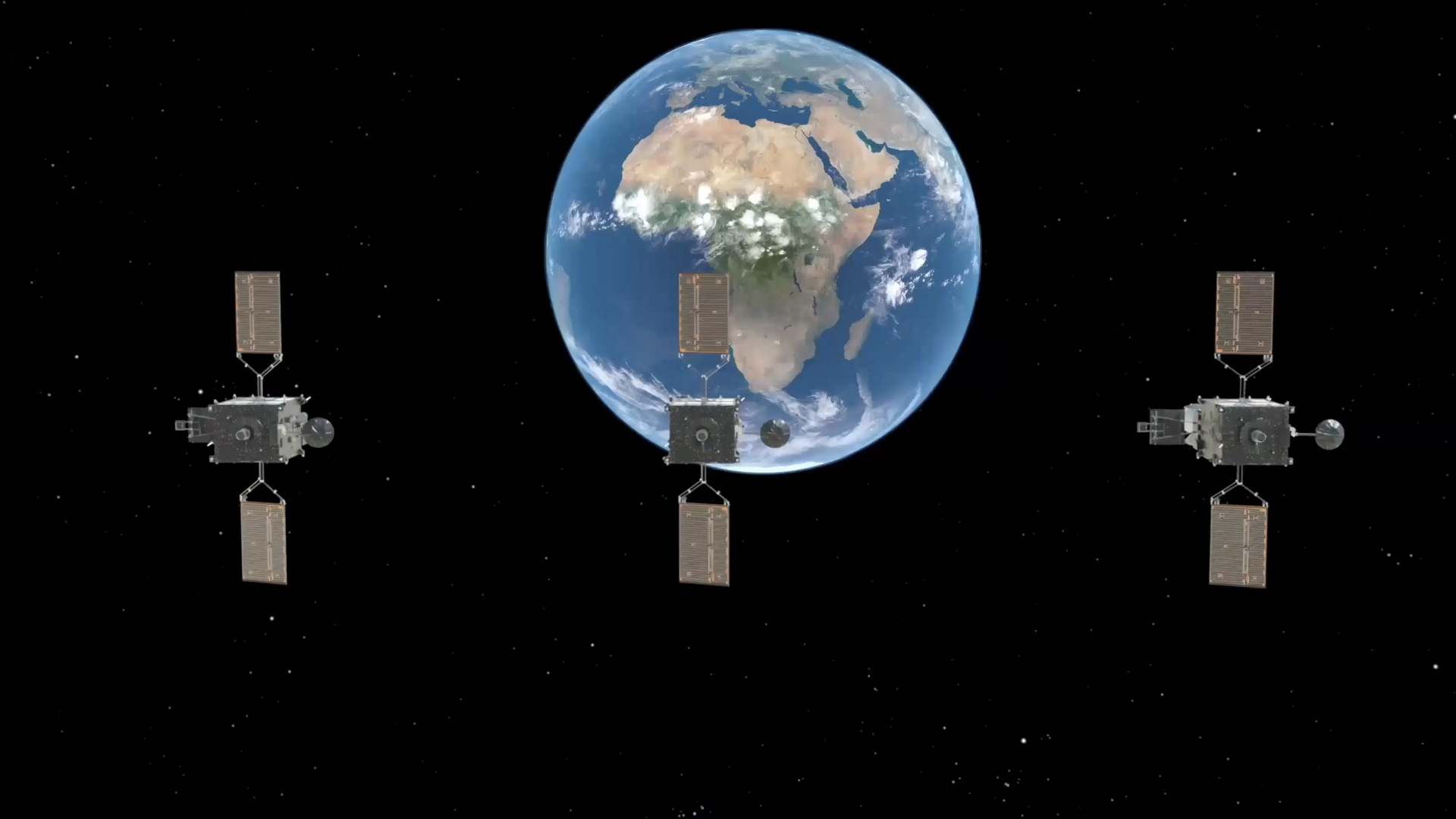
The atmospheric sounding instrument on Meteosat-13 is the first of its kind on a European satellite and one of the few in the world. It produces a detailed picture of the atmosphere every half hour, primarily over Europe. The humidity and temperature values produced by the sounding are important for the models used in weather forecasting, and it also makes it possible to monitor the development of strong and potentially dangerous weather phenomena in real time.
In addition, the instrument detects, among other things, ozone, dust and ash from volcanoes.
Together with the camera and lightning imager on Meteosat-12 and the soon-to-enter-service MTG-I2 (future Meteosat-14), storms can be followed from early signs all the way to full intensity. This helps protect people and infrastructure.
The new infrared sounder works on the same principle as a thermal camera. The instrument simultaneously measures nearly 2,000 infrared wavelengths, the analysis of which provides information from different altitudes and about different constituents of the atmosphere.
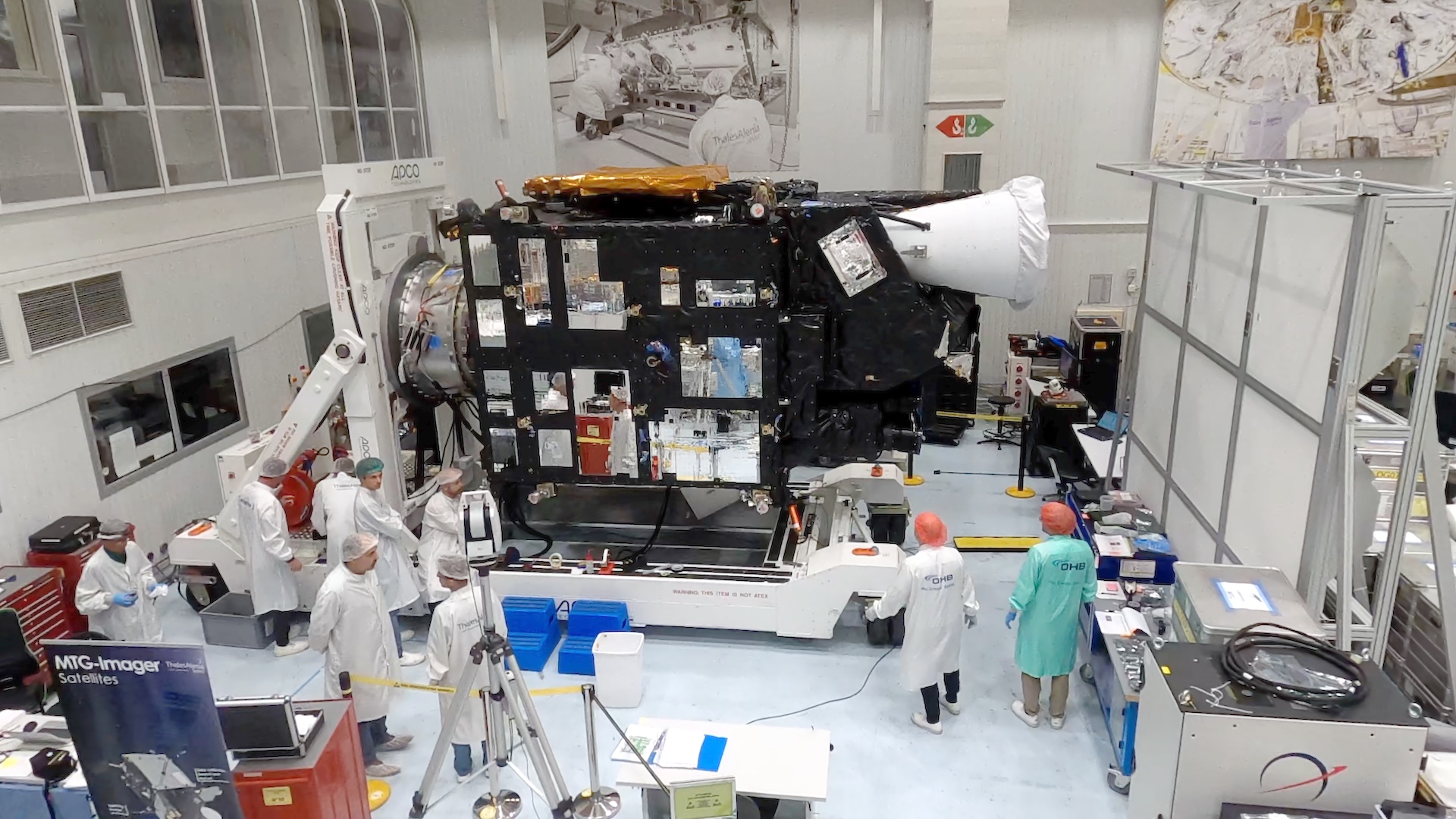
Meteosat Third Generation is the most complex European observation system ever built for weather and climate monitoring. The image above shows MTG-I1, the current Meteosat-12. The S satellites look very similar from the outside.
The satellites were developed by EUMETSAT and ESA and built by a consortium led by Thales Alenia Space. The German company OHB was responsible for the sounding instrument. The satellites are operated by EUMETSAT.
Meteosat-13 also carries the Sentinel-4 instrument of the European Union’s Copernicus programme, which produces air-quality data.