
New Meteosat imager satellite launched
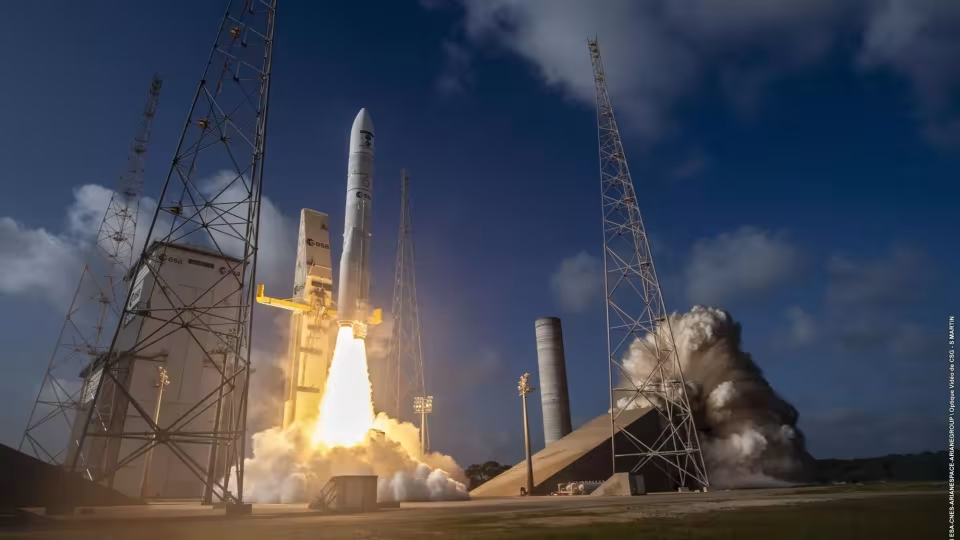
The newest of the new-generation Meteosat satellites was launched on Thursday evening, Finnish time. Ariane 6 lifted off from the Guiana Space Centre in Kourou on 27 August at 23:11 Finnish summer time with the MTG-I2 satellite on board. The satellite separated from Ariane 6’s upper stage 36 minutes after launch. It is now on its way to its station in geostationary orbit, at an altitude of about 36,000 kilometres.
This is the second imaging satellite of Meteosat Third Generation, MTG-I2, and the last satellite in the first MTG trio.
MTG (Meteosat Third Generation) consists of two types of satellites, imagers and sounders. Their platforms are largely similar, but their instruments differ.
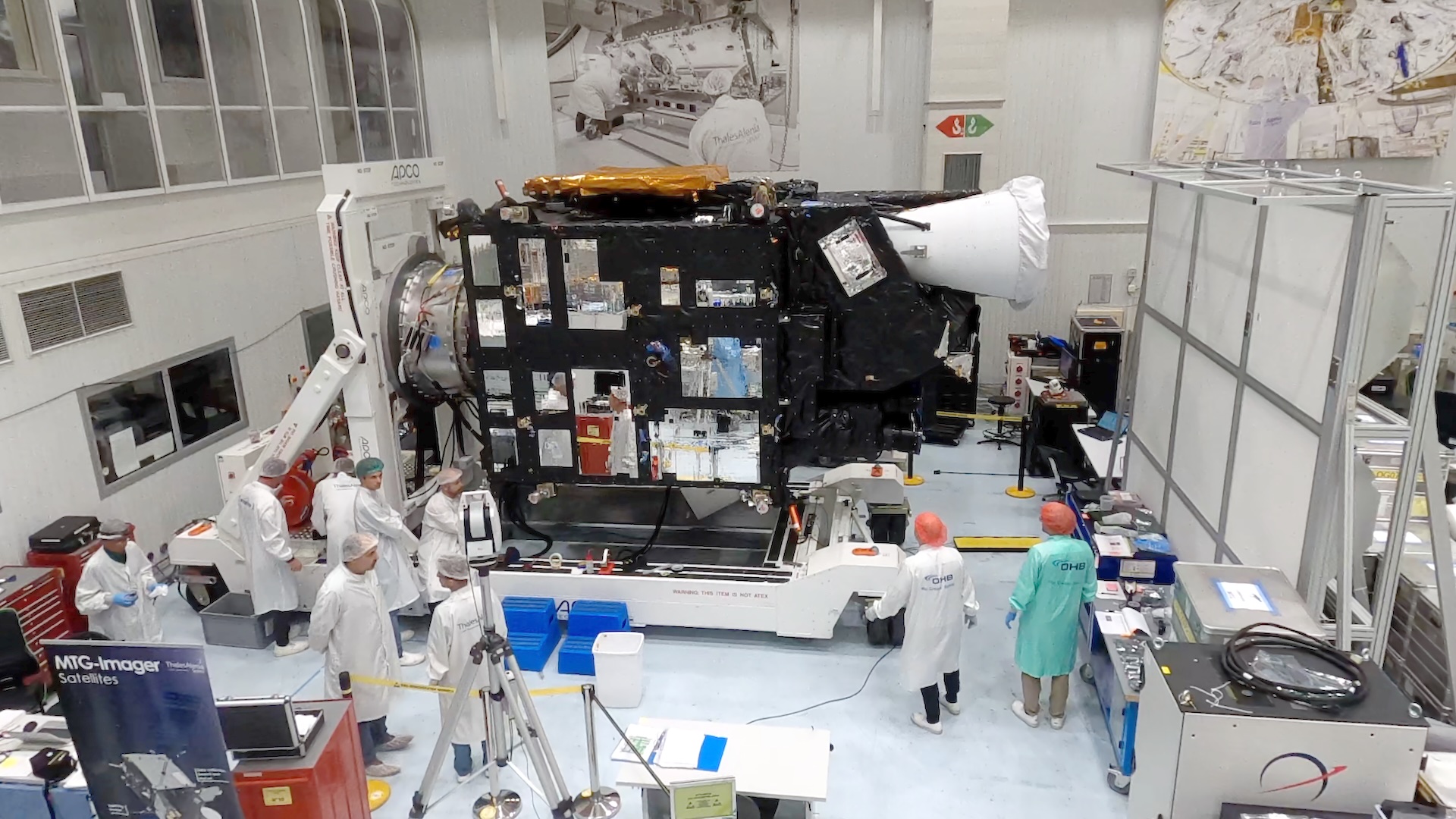
The imaging satellites continue the observing series of earlier Meteosat satellites. They image Earth at several wavelengths; over Europe, rapid scanning can repeat as often as every 2.5 minutes. The first such satellite was launched in 2022. The newly launched MTG-I2 will complement it to provide the first full operational imaging capability, and will also serve as a backup.
On the sounding satellites, the main instrument is the infrared sounder IRS, a Fourier-transform spectrometer that measures vertical profiles of atmospheric temperature, humidity and trace gases from geostationary orbit. In effect, it can form a three-dimensional picture of the atmosphere.
One MTG family consists of two imaging satellites and one sounding satellite. Once the first trio is on station and observing Europe and Africa, Meteosat Third Generation observations can begin at full capacity.
Because these weather satellites are critical for Europe, the system will be replenished with new satellites from the early 2030s, so that operations can continue well into the 2040s.
Read more about the new Meteosat weather satellites on ESA and EUMETSAT pages.