
Exploring the Space Economy in Asia: From Kyoto to Indonesia and Fukuoka
What does the emerging space economy look like when viewed from Asia?
This was one of the questions accompanying me during my three-month research visit to Japan in spring 2026. From 26 February to 30 May, I was a visiting professor at Kyoto University, hosted by Professor William W. Baber at the Graduate School of Management.
The visit formed part of my work in the SpaceEconomy project and provided an opportunity to advance ongoing research while building new connections between Finland and Asia.
Working on space business in Kyoto
A major focus of my stay at Kyoto University was Space Business: The Ecosystem, a forthcoming book examining the rapidly developing business ecosystem around space technologies and services. During the visit, I worked on my responsibilities as an editor of the book, including reading and evaluating chapter proposals and identifying suitable reviewers.
At the same time, I worked on four chapters for the book. This provided an opportunity to bring together different perspectives on the space economy and to think more broadly about how space technologies become part of viable businesses and ecosystems.
Another important part of the visit was analysing research data that I had collected from Japanese space companies during my earlier visits to Japan. Japan provides a particularly interesting environment for studying the space economy because established corporations, emerging space ventures, universities and public organisations all play important roles in the development of the ecosystem.
From the perspective of the SpaceEconomy project, the interesting questions extend beyond technological development. How do companies transform space technologies and satellite data into services that customers value? How are new business models created around these technologies? How do space companies build ecosystems, scale their businesses, and expand internationally?
These questions connect space business with much broader discussions in international business, innovation and entrepreneurship.
Extending the discussion to Indonesia
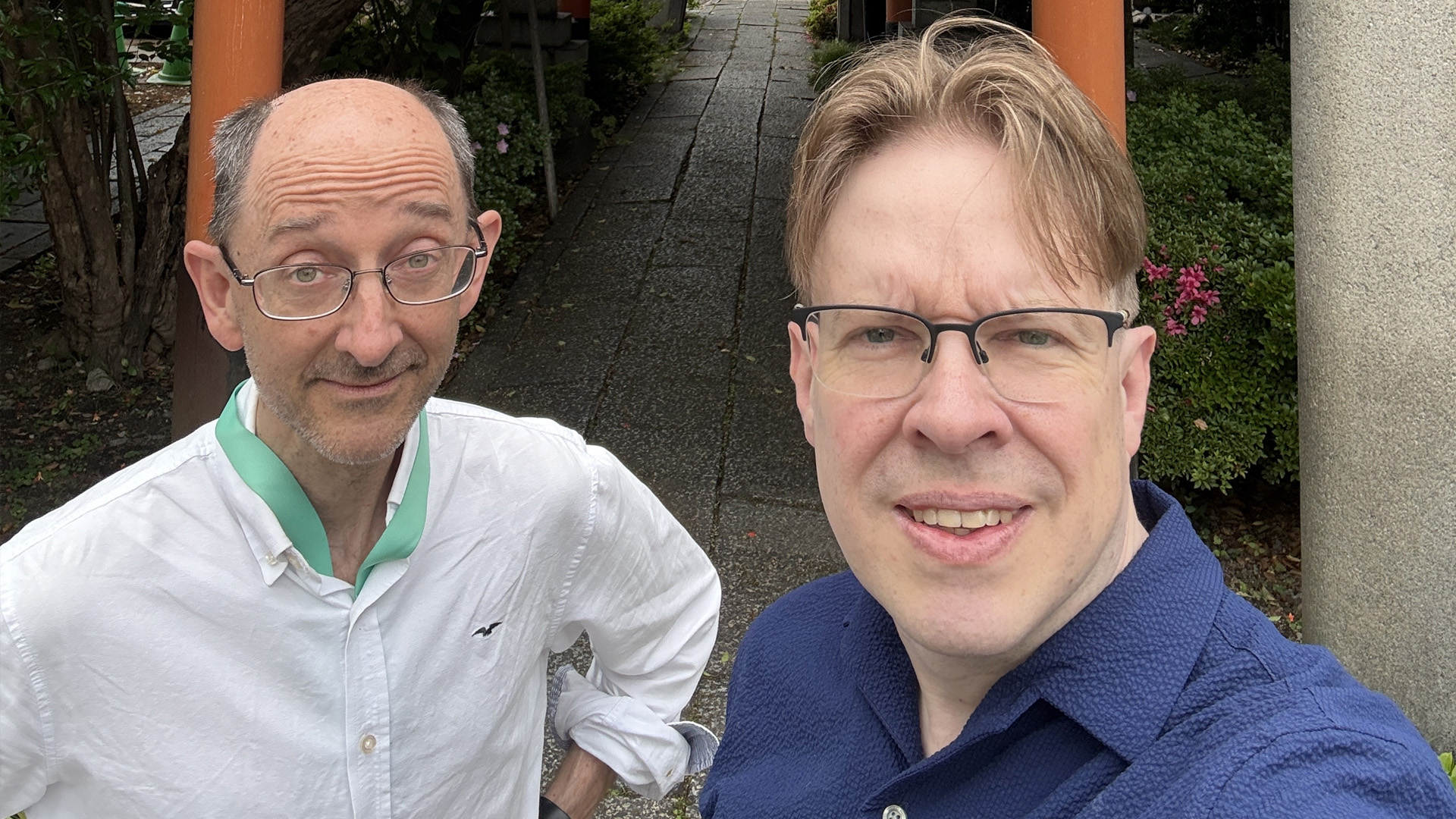
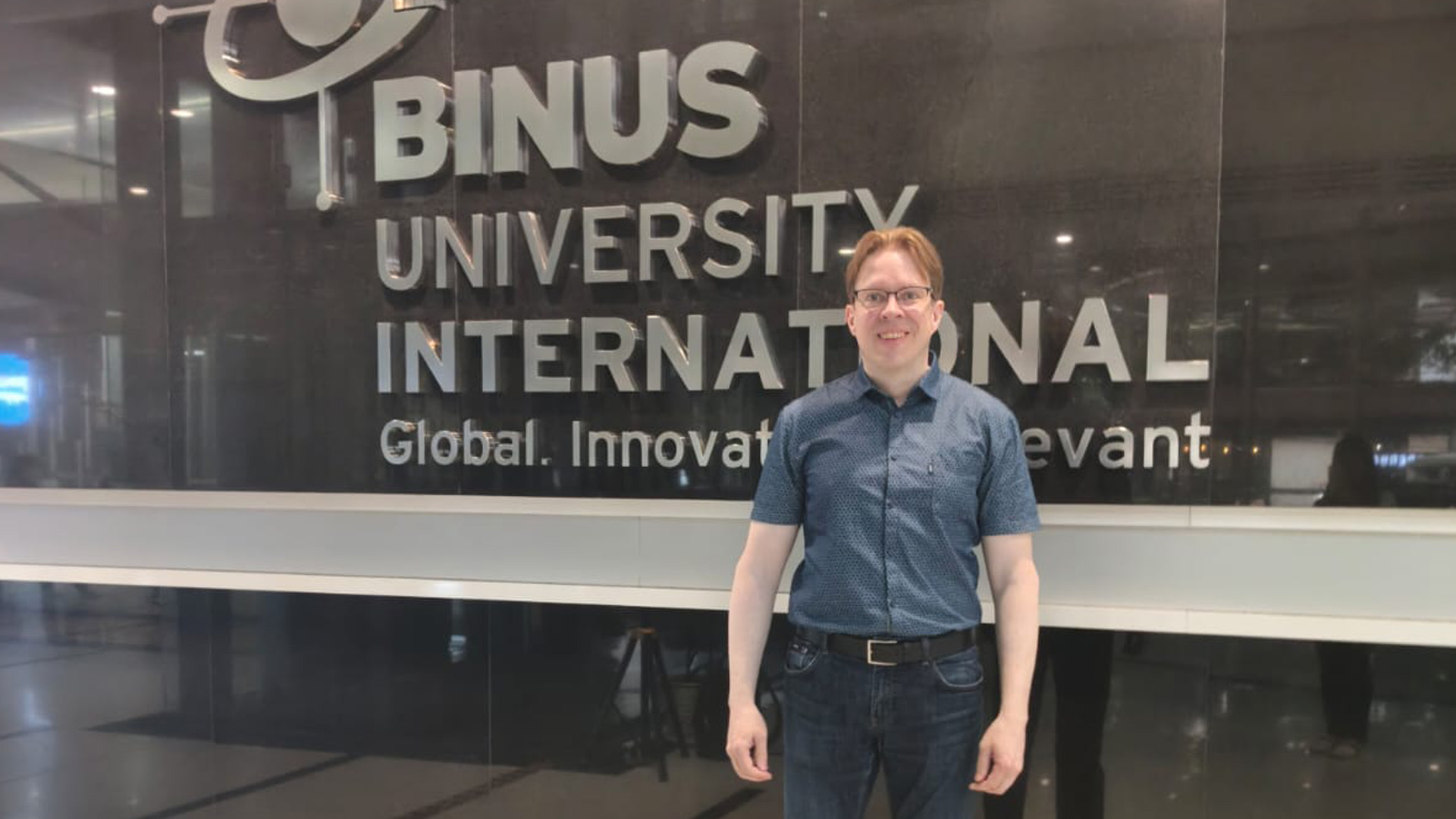
During my stay in Asia, I also had the opportunity to visit Indonesia. I visited President University and BINUS University, where discussions with colleagues provided a different perspective on the emerging space economy. At both universities, there was considerable interest in space economy research.
What was particularly interesting was how naturally the topic connected with existing research on digital business, innovation, and entrepreneurship. Space business may initially sound like a highly specialised field, but many of the underlying research questions are familiar: How are new markets created? How do firms develop innovative business models? How do digital technologies reshape industries? And how can companies commercialise and scale new technologies?
Indonesia also provides an interesting context in which to consider these questions. As a large and rapidly developing digital economy, it offers numerous potential applications for satellite data and other space-enabled services. This makes it an interesting environment for studying how technologies developed within the space sector can create value far beyond the space industry itself.
The discussions also led to concrete opportunities for continued collaboration. Following the visit, I was invited to give an online keynote presentation during the summer at the AIABI/IMABI conference held at President University, where I presented on the topic “From Space Data to Business Intelligence: How AI is Transforming Sustainable Business.” This illustrates one of the benefits of international research visits: conversations that begin around a meeting table can develop into new academic activities and longer-term collaboration.
From space data to business value
One recurring theme during the spring was that the space economy should not be understood simply in terms of rockets, satellites or exploration. Increasingly, its economic impact comes from what happens after satellites are in orbit. Earth observation is a good example. Satellites generate enormous amounts of data, but data alone does not create business value. It needs to be processed, analysed and combined with other information before it can support business or societal decision-making.
Developments in AI are accelerating this process and creating new possibilities for transforming satellite observations into actionable information.
For researchers in business and management, this raises fascinating questions. Who captures the value created from space data? What kinds of business models emerge around it? Which actors are needed to build functioning ecosystems? And how can companies offering space-enabled services internationalise into markets with very different institutional and economic environments?
The discussions in Japan and Indonesia reinforced my view that answering these questions requires looking beyond the traditional boundaries of the space industry. Space economy research increasingly intersects with research on digital transformation, AI, sustainability, entrepreneurship, and international business.
Ending the journey in Fukuoka
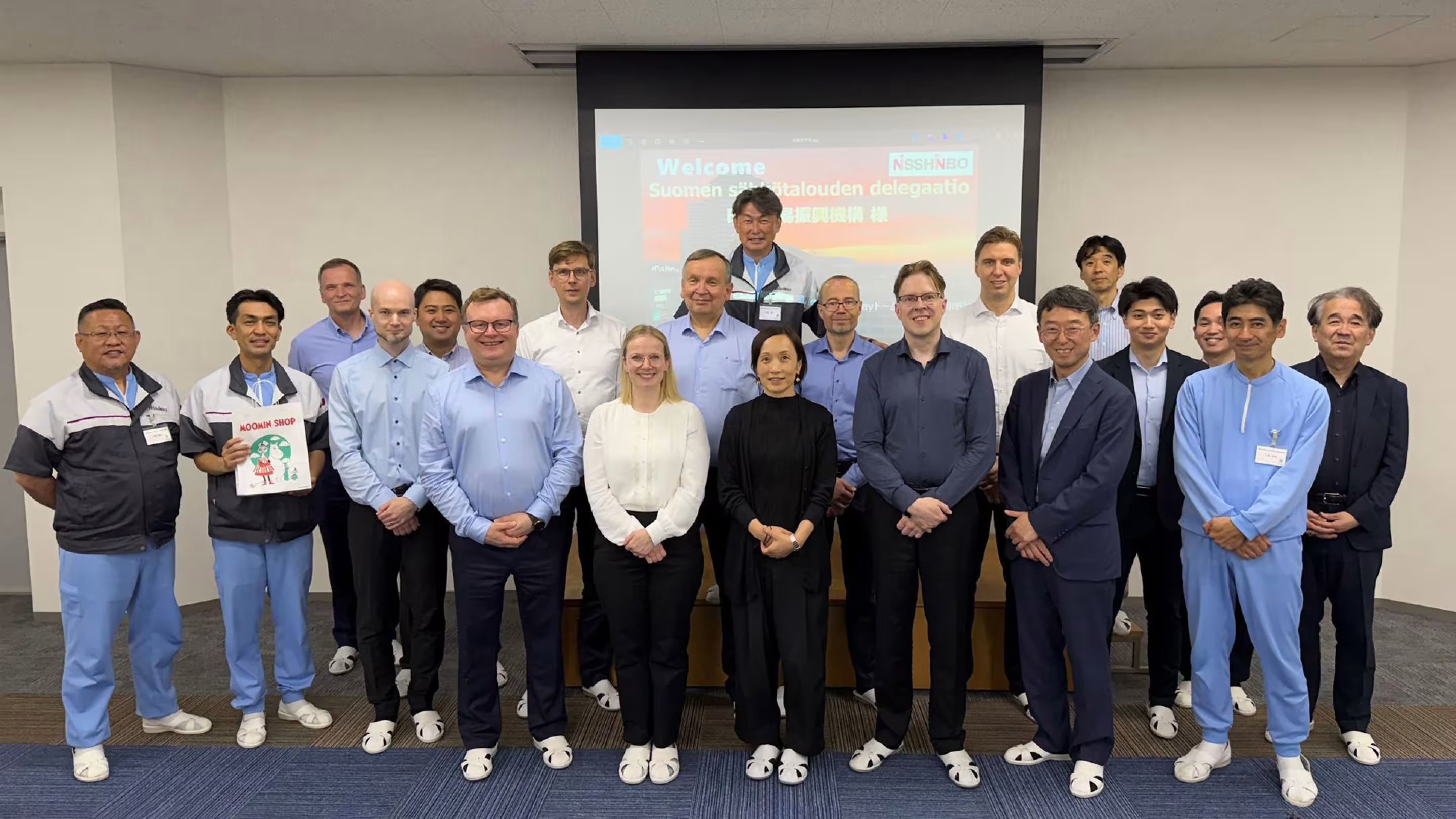
The final weekend of my stay in Japan provided another opportunity to expand the international network around space economy research. I participated in Business Finland's Mission Fukuoka, which brought Finnish participants together with actors in the Fukuoka innovation and startup ecosystem.
For me, the mission provided an opportunity to establish new contacts in Japan and explore their potential relevance for future SpaceEconomy research and projects. Among these were connections with Kyushu University, opening interesting possibilities for future academic collaboration.
This was a fitting way to conclude the three-month visit. Research visits are naturally about completing concrete tasks – analysing data, writing papers and books, and developing research ideas. But their longer-term value often comes from something that is more difficult to measure: meeting people, exchanging ideas and discovering connections that were not necessarily anticipated before the visit.
Building bridges for the emerging space economy
Looking back at the spring, Kyoto, Indonesia and Fukuoka provided three complementary perspectives on the SpaceEconomy project. Kyoto offered the time and academic environment to concentrate on analysing Japanese space companies and developing the Space Business: The Ecosystem book.
Indonesia demonstrated how readily space economy research connects with established research communities in digital business, innovation and entrepreneurship. Fukuoka, in turn, opened new possibilities for collaboration and future projects.
Together, these experiences also highlighted an important characteristic of the emerging space economy. Space technologies may originate in a highly specialised technological environment, but the value they create increasingly depends on their connections with other industries, technologies, and markets.
Understanding those connections – and how they develop across countries and ecosystems – is one of the questions we are exploring in the SpaceEconomy project. My spring in Asia provided both new material for answering that question and, perhaps more importantly, many new questions and connections to pursue.