Stakeholder newsletter 2/2026 of the SpacEconomy project
Here comes the second newsletter of our project, perfectly timed right after our entire consortium’s second meeting and before the upcoming summer holiday season.
On Monday 25 May, we gathered at the University of Turku to discuss what has been achieved so far, as well as what lies ahead.
Certainly our most concrete achievement is the cross-study agreement between our partners and others. This significantly increases students’ opportunities to learn about different areas of space activities and the space economy in a convenient and flexible way.
We have also been very visible in the media and among decision-makers. Many of our partners already knew each other quite well before the start of our project, but especially bringing economists into our previously very technical and space-science-focused circle has been interesting.
All work packages are already underway, and they explore how we can utilize space to strengthen Finland’s competitiveness.
On our website and in our LinkedIn group there are many posts about our activities and space industry news, but here are a few highlights from what has happened in the first half of the year.
 MARCH: Citizens’ Research Panel discussed the space economy
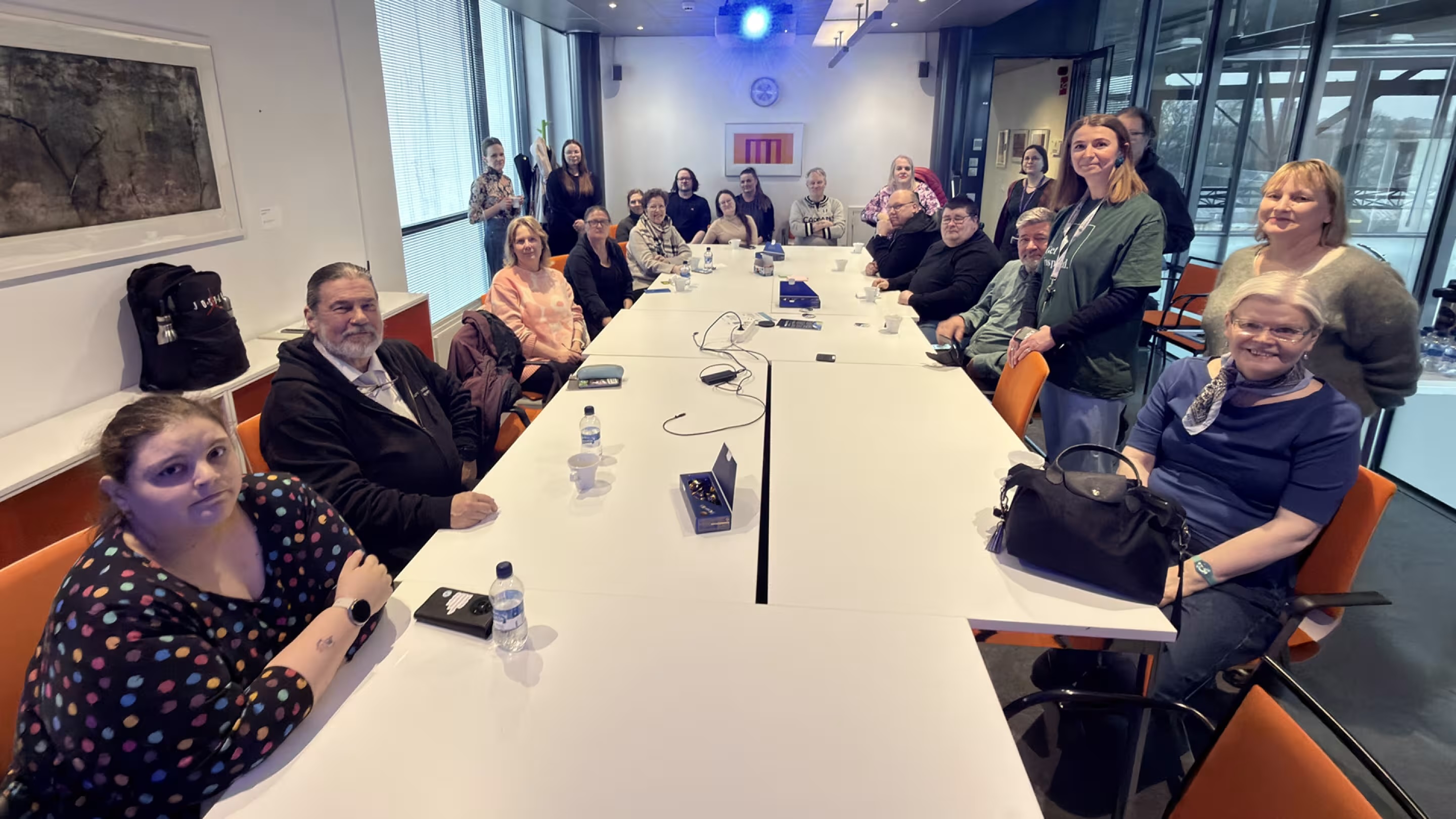
The University of Turku’s Citizens’ Research Panel was invited at the request of the SpacEconomy project to think about the space sector on Monday 23 March.
The participants, more or less “ordinary citizens”, shared what they know about the space economy, how they get information about space events, and how they would like to receive it in the future.
The results will primarily help with our project’s communication, explaining space applications, and increasing awareness of the Finnish space sector.
Read more about the Citizens’ Panel on our website
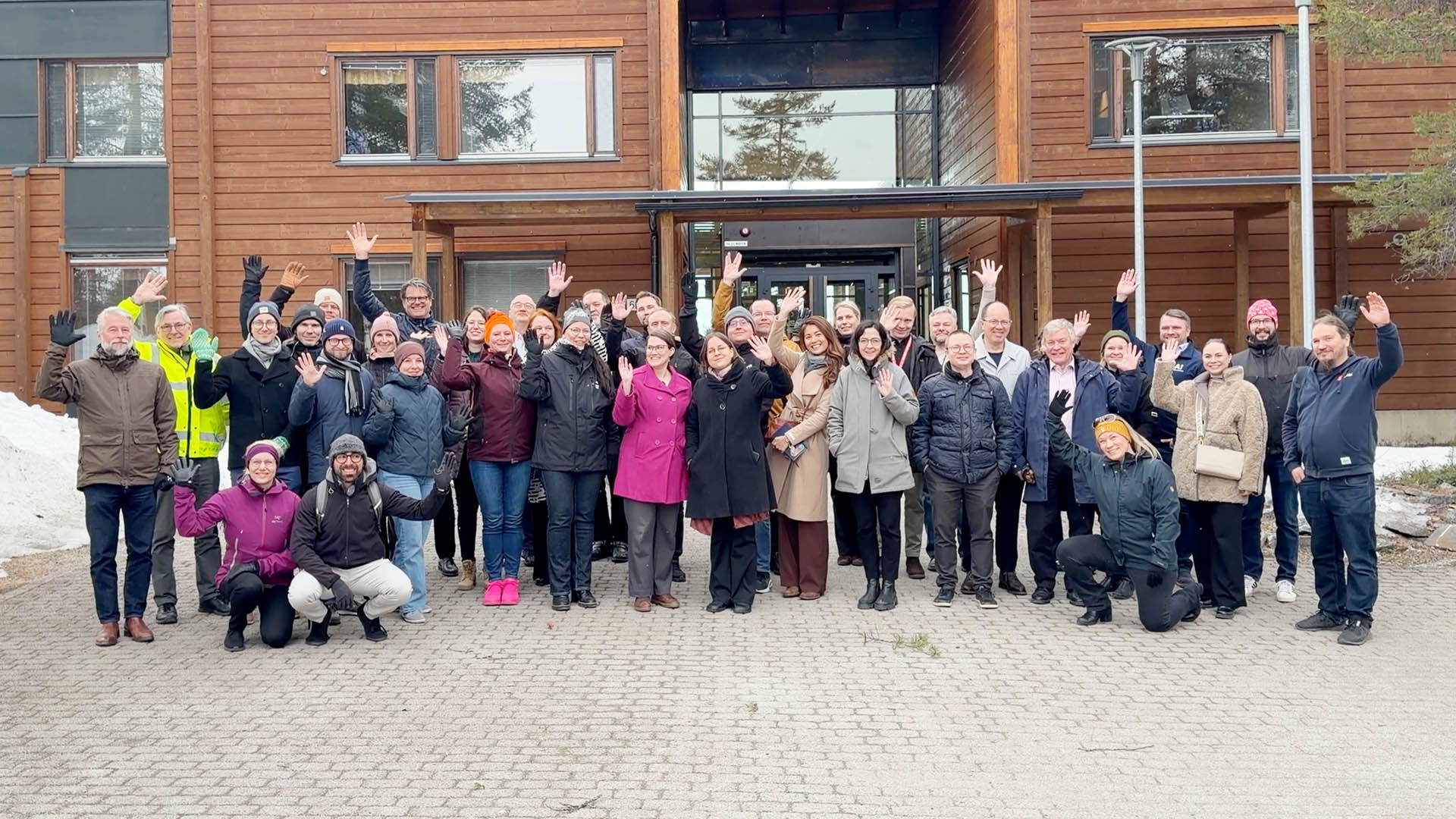 APRIL: First ESA Supersite in Sodankylä and SpacEconomy company meeting
In Sodankylä, at the Tähtelä observatory area, the Finnish Meteorological Institute’s Arctic Space Centre and the University of Oulu’s Sodankylä Geophysical Observatory operate, conducting space research, measurements, and receiving satellite data.
The European Space Agency ESA has chosen the Arctic Space Centre as its first Supersite, where satellite measurements are calibrated and validated.
The centre’s key task is to measure, for example, forests, snow, water bodies, greenhouse gases, and atmospheric composition, and to compare the results with satellite observations to ensure their accuracy.
The launch event for the new centre’s operations included numerous researchers and representatives of companies involved in the centre’s activities. The event also promoted the development of the space economy in Finland, which is why the SpacEconomy project was involved in the arrangements.
Read the article on our website
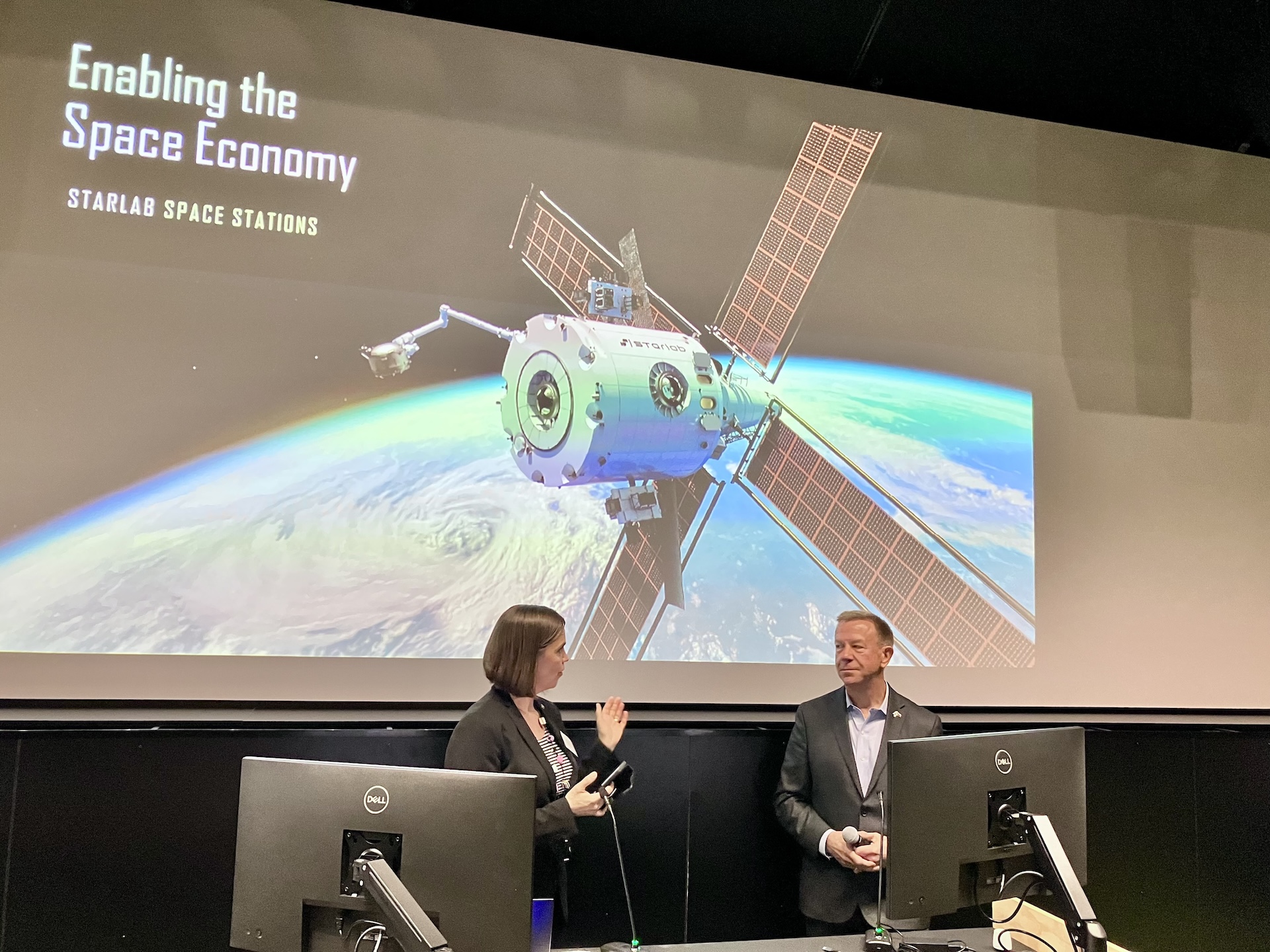 MAY: Launch into Space brought space professionals together in Tampere
The Launch into Space event, organized by Tampere University and the SpaceEconomy project, brought together a large group of researchers, companies, and students at Kampusareena on 13 May. Due to growing interest, the originally small-scale event expanded into a significant networking day.
The program featured current perspectives on space research and business.
Company perspectives were provided by, among others, ICEYE, Beyond Gravity, and Northbase. Business Tampere’s Harri Ojala highlighted the growth potential of the space economy in the region.
The “sisunautti”, NASA’s former astronaut Timothy Kopra, aroused particular interest by reminding that the space sector needs multidisciplinary expertise.
The lively networking and poster session showed that there is a strong will in Tampere to develop cooperation in the space sector.
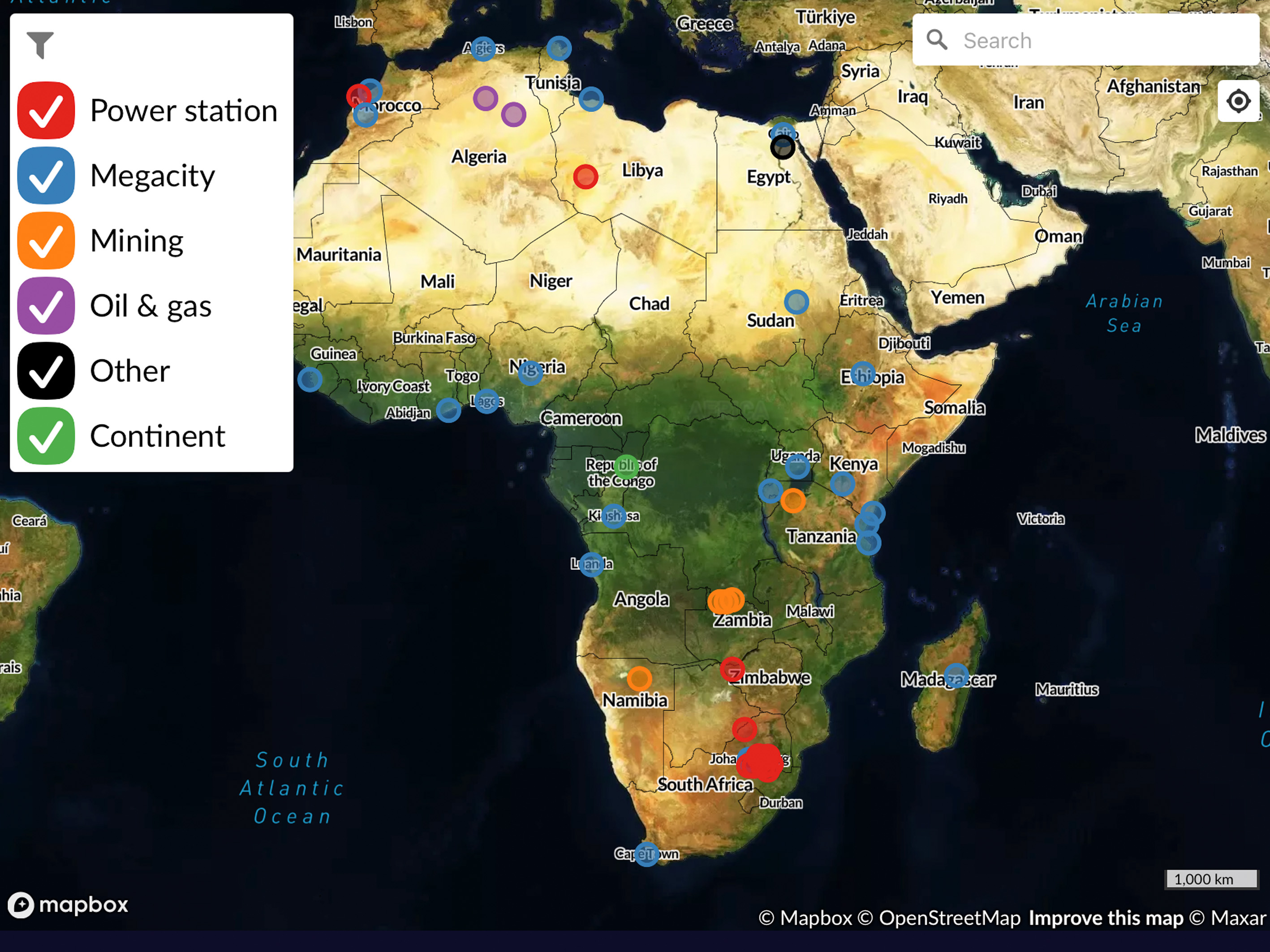 MAY: Finnish Meteorological Institute’s Emission Observatory included in Sitra’s Most Interesting in the Data Economy list
The Finnish Meteorological Institute’s Emission Observatory platform is an excellent example of how up-to-date environmental information from satellite observations is made easily understandable and accessible.
The service can be used to monitor, for example, air quality, the effects of climate change, and the use of natural resources. Thanks to its openness, it also enables the integration of new datasets and applications.
Emission Observatory promotes the use of science and supports sustainable development in both research and decision-making. It has already been applied, for example, to corporate sustainability reporting.
Emission Observatory was implemented as part of the Academy of Finland’s Proof of Concept 2023 funding, and its maintenance and updating continues in the SpacEconomy project. It was selected for Sitra’s “Most Interesting in the Data Economy” list on 28 May 2026.

We also participated in the ESA BIC Nordic & Baltic event held in Stockholm on 15–16 April, getting a sense of the space economy winds in our neighboring countries.
Highlights from recent publications
SpacEconomy partners have also been active outside the SpacEconomy project. Evidence of this includes the following publications.
In an article published by IMR Press, Stakeholders’ Influence in Shaping Sustainability Practices for Nordic Space SMEs, researchers from the University of Vaasa Sadia Tangem, Eldrige de Melo, and Arto Ojala examined how Nordic space SMEs consider sustainability in their operations and how different stakeholders influence this.
According to the study, external pressures — such as regulation, societal expectations, and international cooperation — guide companies’ strategic choices and innovations. The research highlights the dual role of satellites: they support the UN Sustainable Development Goals, but their use also involves challenges regarding the sustainability of low Earth orbit.
The article offers companies a practical framework for planning and implementing sustainable space solutions that take into account both end-user needs and the demands of the global market environment.
Researchers from the Finnish Meteorological Institute Henrik Virta, Janne Hakkarainen, Iolanda Ialongo, Johanna Tamminen, Marianne Girard, Berend J Schuit, and Joannes D Maasakkers have in turn examined satellite-based methane emission measurements at the Secunda synthetic fuel production facility in South Africa. The results show that different satellite systems produce slightly different emission estimates, but they are still in line with the numbers reported by the company itself.
The study emphasizes that satellite observations are an effective way to monitor and verify emissions, and that by combining data from different resolutions, a more accurate picture of emissions can be obtained at both the facility and individual source level.
This article Monitoring Persistent Methane Emissions from the Secunda CTL Synthetic Fuel Plant Using Satellite Observations is published by ACS Publications.
Interesting events coming up
While waiting for the start of summer, we would like to remind you that there are interesting events coming up during and after the summer in which the SpacEconomy project is involved.
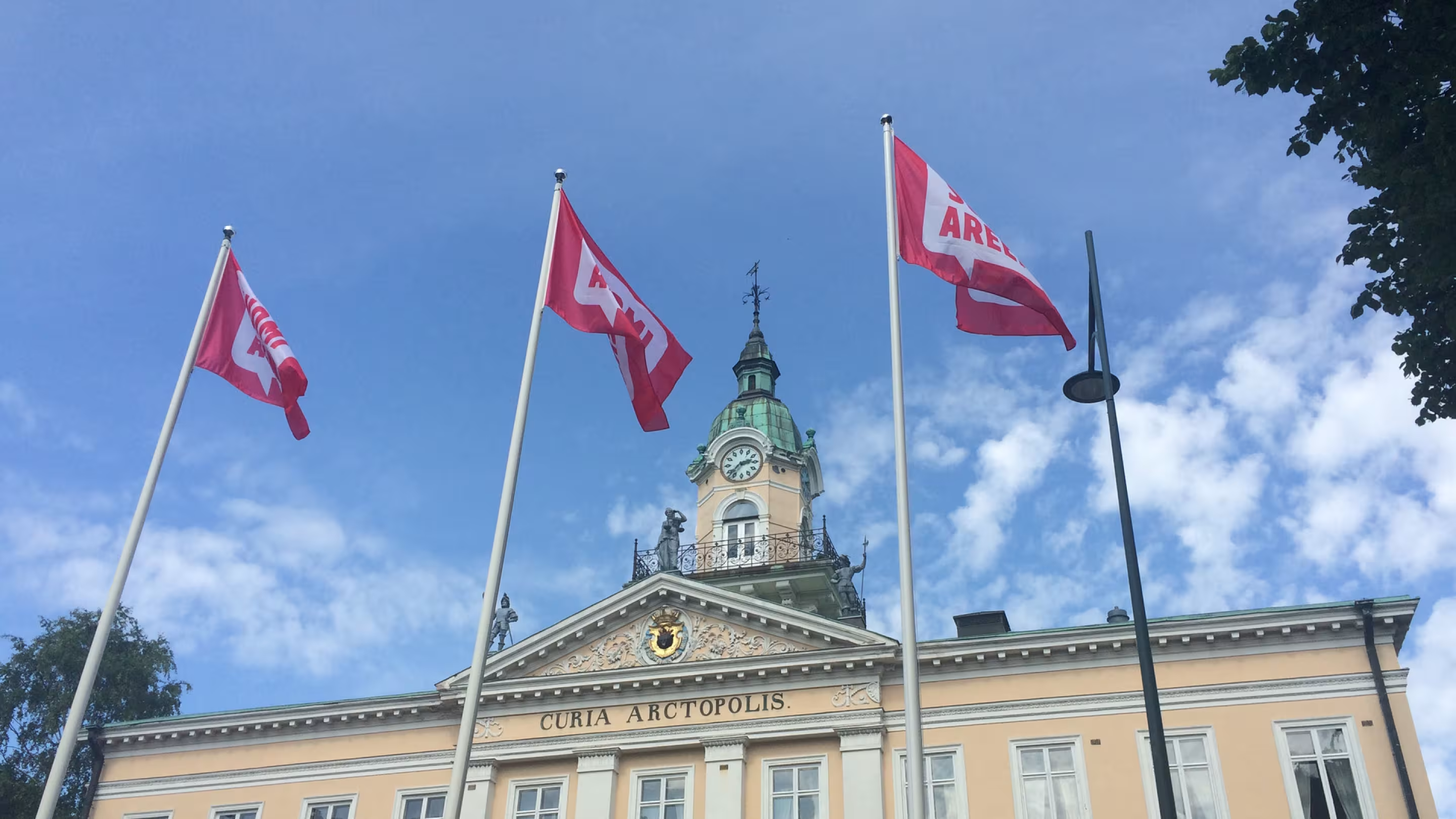
You can meet us, for example, at the SuomiAreena event in Pori on Friday 26 June at 13-16 in the space event at Raatihuoneenaukio, and in the second week of August in Vaasa at the Wasa Future Festival.
We will also participate in September in the Strategic Research Council’s WELEC programme Strategic research programs biennial conference.
In May, it is still possible to participate in the SPACE4CITIES project webinars.
Have a relaxing summer everyone!