
New Glenn succeeded in landing, but failed in launching the satellite
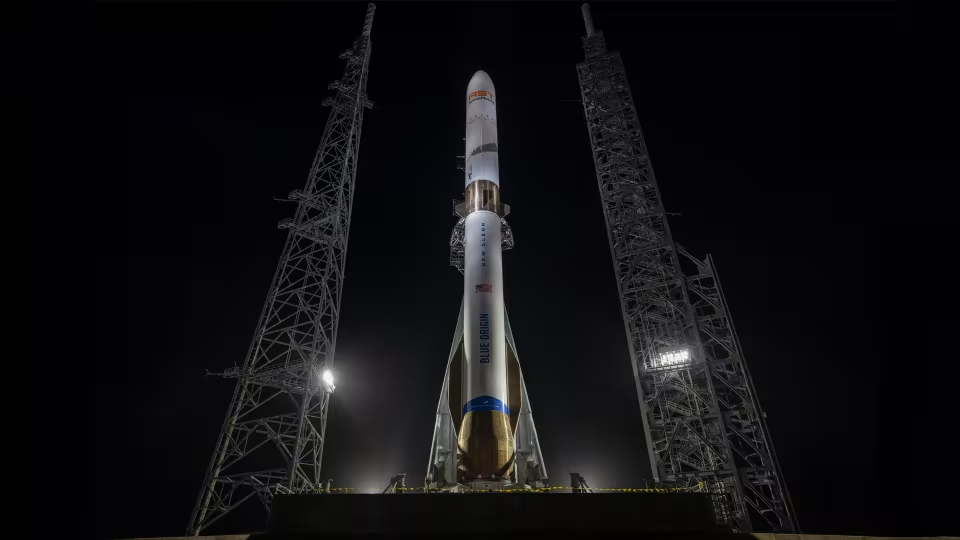
The company Blue Origin conducted the third flight of its new New Glenn rocket this Sunday. The goal was to send AST SpaceMobile’s Bluebird 7 communications satellite into space, but this did not go as planned.
After a successful launch, the rocket’s upper stage placed the satellite into too low an orbit, and the satellite cannot raise itself to a higher orbit using its own engines. As a result, the satellite is unusable.
However, the rocket’s reusable first stage worked exactly as intended. This was a booster that had already been used on a previous flight, making this its second flight. It carried the second stage and the satellite high enough and to the required speed, after which it landed on a platform waiting at sea.
From Blue Origin’s perspective, this may have been the most important outcome: the rocket works well in this regard. This is the first time anyone other than SpaceX has successfully reused a rocket capable of delivering payloads to orbit.
SpaceX is therefore gaining a competitor, although it still holds a significant lead with its Falcon 9 rocket, which flies multiple times per week, and with the development of the larger Starship vehicle.
Blue Origin had planned four more New Glenn flights this year, but due to the upper stage malfunction that occurred, the rocket is officially grounded until the company reviews the flight together with U.S. aviation authorities.
A prolonged grounding could also affect NASA’s plans to return to the Moon: Blue Origin is one of the developers of lunar landers, and a test version of the lander is intended to fly later this year – launched by the New Glenn rocket.