
FLEX and Sentinel-3C hoisted into space by Vega-C
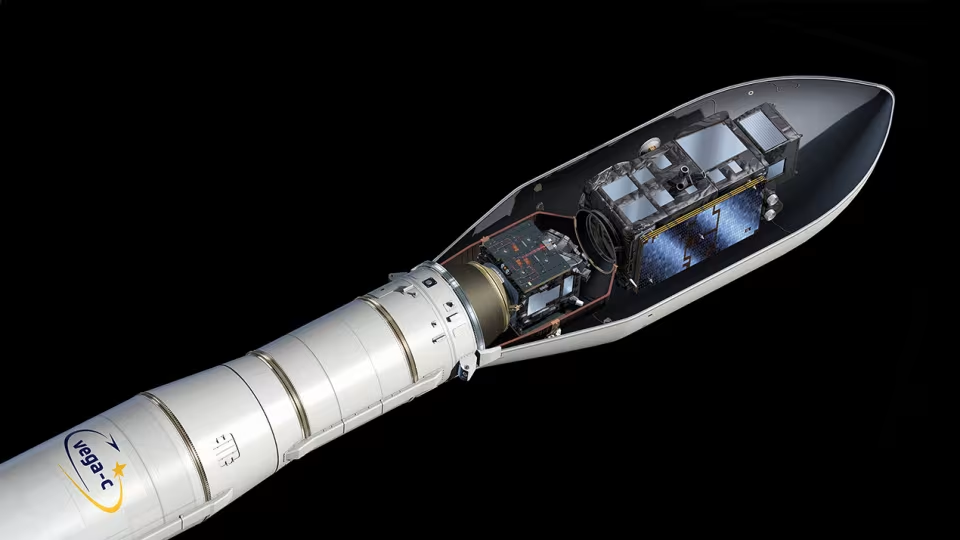
The European Space Agency’s FLEX Earth Explorer satellite and the Copernicus Sentinel-3C satellite were launched in the early hours of 15 September Finnish time (14 September at 22:21 local time).
The launch was carried out on a Vega-C rocket, whose payload compartment accommodated both satellites. Sentinel-3C was released first, and FLEX followed about an hour later. Both satellites activated as expected after reaching space, and their commissioning has begun.
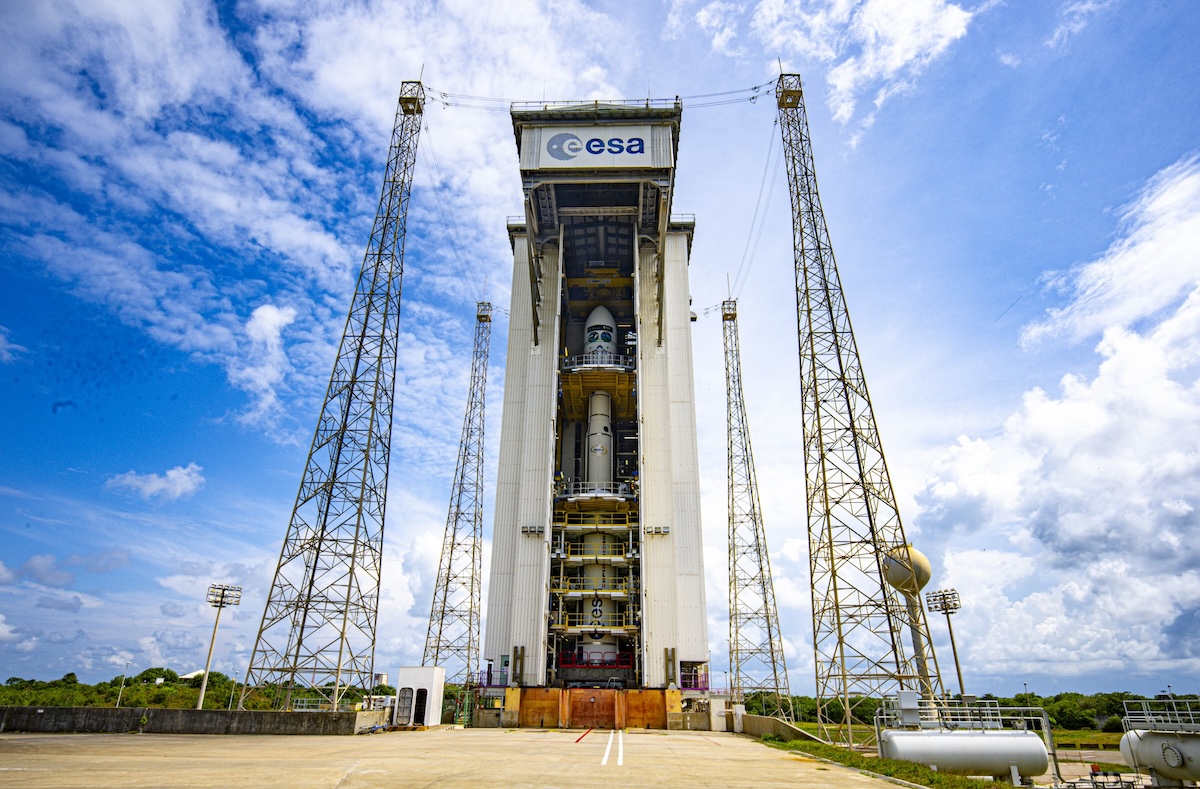
FLEX is ESA’s first satellite designed specifically to measure photosynthesis from space. Its Fluorescence Imaging Spectrometer detects the extremely faint fluorescence emitted by plants as they absorb sunlight during photosynthesis.
This makes it possible to see how efficiently vegetation converts sunlight and carbon dioxide into energy. Data from the FLEX satellite will help scientists assess plant health, ecosystem productivity, and the effects of environmental stress and climate change.
FLEX also involves significant Finnish expertise, as the Finnish Meteorological Institute has played an important role. The Institute has developed a method to remove the interfering effect of the atmosphere from the satellite’s hyperspectral measurements, so that accurate information can be obtained on the fluorescence emitted by vegetation. This is known as atmospheric correction, and the Finnish Meteorological Institute provides more information in its press release.
Sentinel-3C is the third satellite in the Sentinel-3 series. It observes the oceans, land, ice and atmosphere. It measures, among other things, ocean and land-surface temperatures, ocean colour, sea and ice conditions, vegetation, and inland-water levels. The satellite provides near-real-time information for ocean forecasting, climate monitoring, environmental management and scientific research.
Sentinel-3C is part of the EU’s Copernicus system. ESA is responsible for its development. After commissioning, the mission is jointly managed by ESA and EUMETSAT: EUMETSAT is responsible for routine spacecraft operations and the delivery of marine and near-real-time atmospheric data, while ESA delivers land, cryosphere, inland-water and offline atmospheric products.
The two earlier Sentinel-3 satellites of the same type are still performing well. Sentinel-3A was launched on 16 February 2016 and Sentinel-3B on 25 April 2018. Their planned lifetime is about seven years, but the satellites carry enough fuel for about 12 years of operations.
Patria has supplied the so-called substrates for the Sentinel-3 satellites’ solar arrays — that is, the structures to which the solar cells are attached.
The Finnish Meteorological Institute uses Sentinel-3 observations (for example land-surface temperature, the ocean, and snow and ice monitoring) and has developed processing chains at the Sodankylä satellite data centre.