Doctoral research reveals the space economy is not only growing, but could be expanding faster
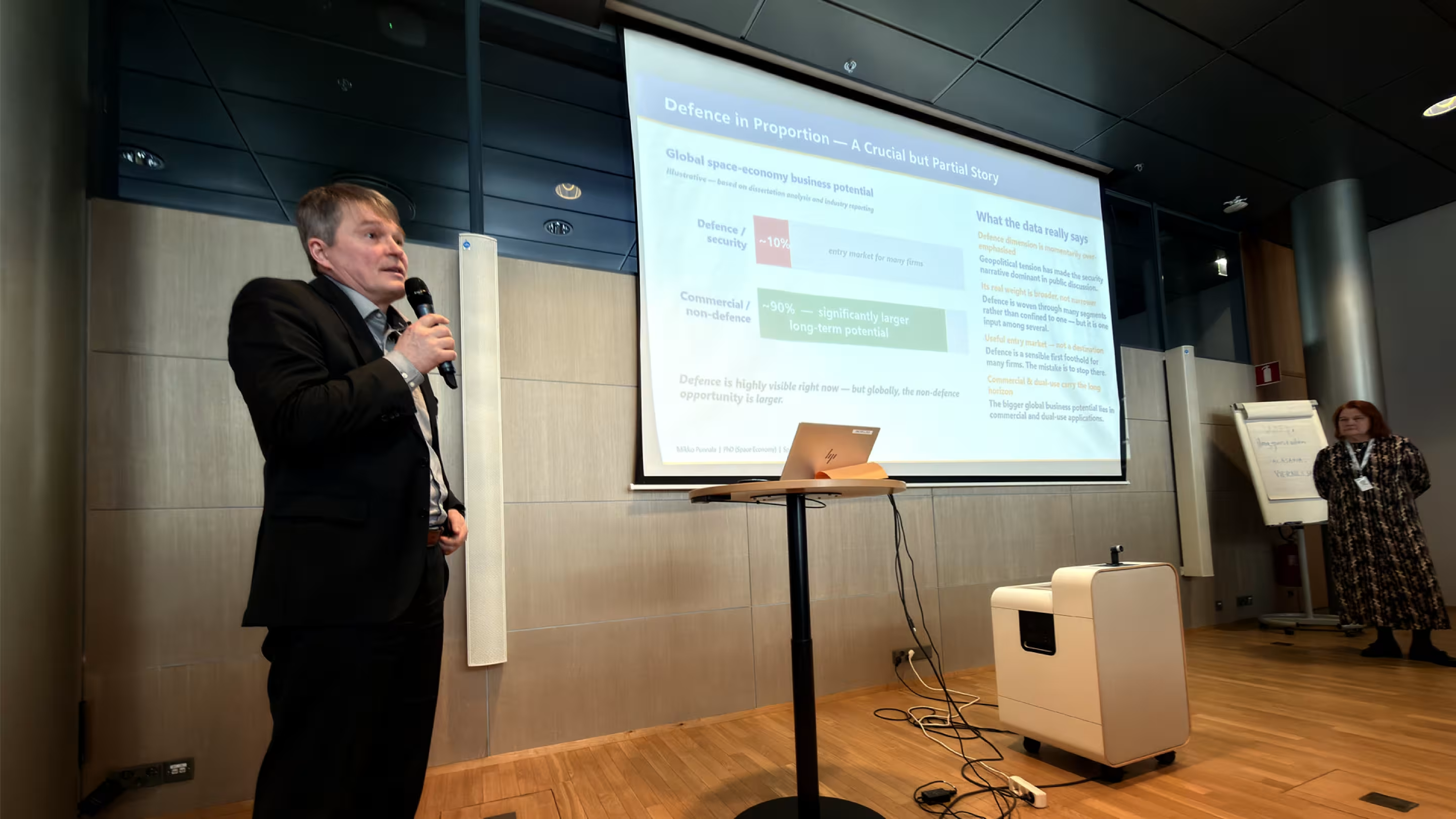
Yesterday (Monday, 20 April 2026), the SpaceFinland Space Business Forum was once again held at the premises of Business Finland. This forum is a gathering of Finnish space sector actors that takes place roughly every other month.
In addition to updates on current topics, such as presentations on calls for proposals from the European Space Agency, the program also features interesting talks.
One of the most relevant presentations for our project this time was by Mikko Punnala, who recently completed his doctoral dissertation on the space economy at the University of Vaasa. He spoke about the internationalisation of small and medium-sized enterprises in the space economy.
His key message was that although the space economy already appears to be growing and evolving rapidly, the pace is only accelerating.
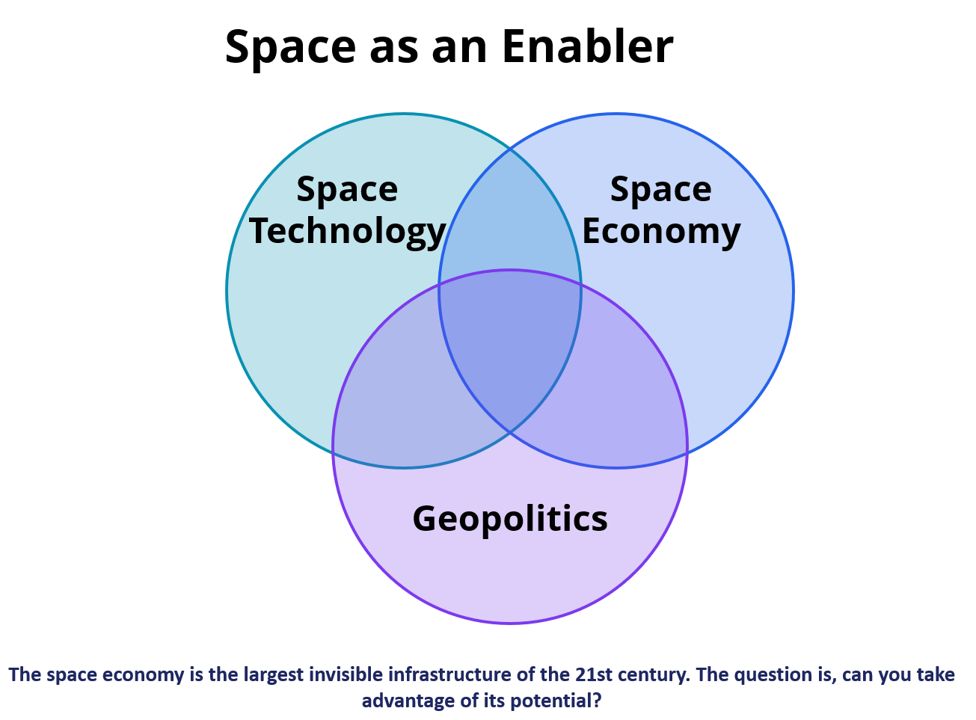
The most relevant analytical perspective is the interaction of three forces: the space economy, space technology, and the geopolitical environment. These do not evolve separately; rather, their convergence defines both the opportunities and the constraints for companies operating in the space sector.
Trends that had already been clearly visible have materialised faster and more strongly than expected. For example, low Earth orbit (LEO) satellite constellations, data-driven services, and the diversification of positioning, navigation, and timing (PNT) capabilities are now part of operational reality rather than future possibilities.
At the firm level, success is shaped by three interrelated factors. Institutional agility determines how well companies can adapt to rapid change. Alignment with regulation is essential, as is active participation in the broader space ecosystem – helping companies access funding, partners, and credibility.
Another interesting aspect of the sector is the persistent gap between traditional space industry actors and industries that benefit from space. Many companies do not recognise that they are part of a value chain enabled by space activities and technologies, which slows down the sector’s development.
The reason often lies at the level of company boards and executive teams, where understanding of the space economy remains uneven. When leadership recognises space as enabling infrastructure, space-based capabilities can be integrated into existing business models. This applies especially to areas such as PNT services, telecommunications, and data-driven decision-making.
Mikko Punnala’s doctoral research is directly linked to the SpacEconomy project, in which the University of Vaasa is also a partner. The results of the research are being utilised in the project in multiple ways.
The doctoral dissertation is available to read for free here:
Internationalising in the Space Economy : Ecosystems, Institutions, and the Strategic Behaviour of Small and Medium-Sized Enterprises in the New Space Economy