
Starship reached orbit (story updated)
Update on the evening of 28 September; original story below
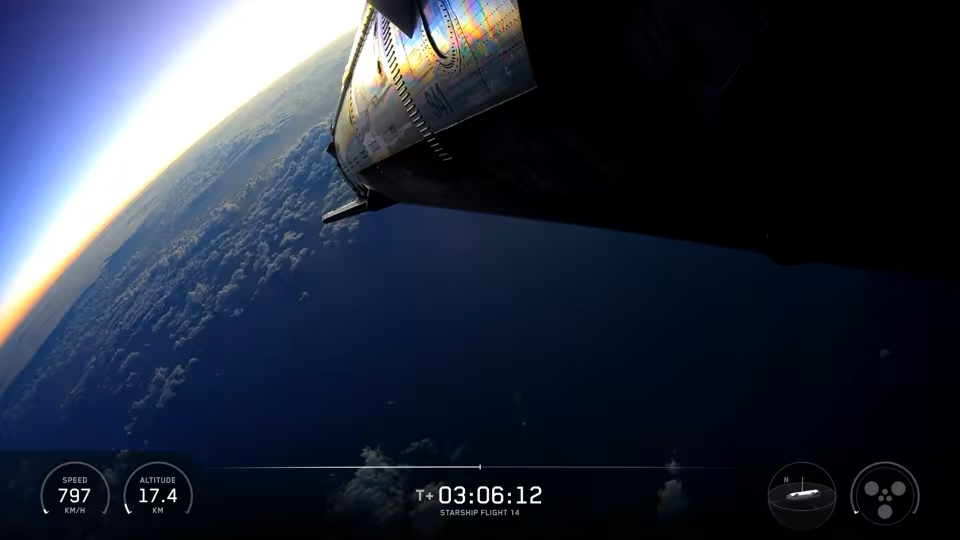
Starship’s Flight 14 went almost according to plan, except that instead of the planned six orbits the vehicle completed only three trips around Earth. The flight was shortened as a precaution because two engines failed during ascent.
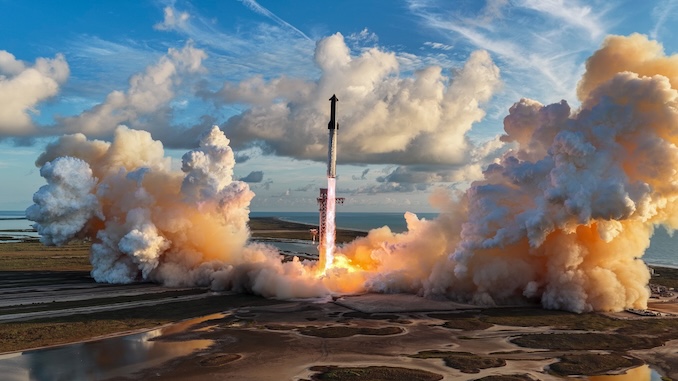
During launch, one engine on Super Heavy — the booster stage that lifts Starship into space — shut down, but with 32 engines still running the flight could continue normally. Depending on the timing and circumstances of an engine failure, as many as three engines can shut down during launch without a material effect on mission success.
One of Starship’s six engines also shut down during the climb to space. The vehicle was nevertheless able to fly normally and accelerate all the way to orbital speed. Before committing to orbit, SpaceX even considered ending the flight, but because the vehicle was otherwise healthy and the engines essential for returning from orbit were in good condition, the decision was made to continue.
Instead of six orbits, only three were flown, so the flight lasted a little over three hours rather than about ten. The vehicle splashed down in the northern Pacific Ocean north of Hawaii, not west of Chile as in the original flight plan.
After the largely successful flight, SpaceX plans the next launch in mid-October and the one after that in November. The first flight from the launch pad under construction in Florida (three pads are planned in total) is expected at the end of this year or early next year.
Original story:
SpaceX plans to fly its most ambitious Starship test today, Monday 28 September: the 14th test flight will, for the first time, reach Earth orbit.
Until now the flights have used a trajectory that brings Starship down to a planned landing area even if something fails during the flight. On the most recent tests the rocket’s upper stage — the Starship spacecraft itself — could already have accelerated to the speed needed to stay in orbit and climbed higher.
On its previous flight in July the vehicle performed fully as planned and released Starlink satellites — also onto that doomed trajectory — so that the satellites and the deployment system could be tested.
Now comes a flight “for real” into space, and the release of Starlink satellites that will enter operational use.
The main objective of the flight is nevertheless to test Starship and the Super Heavy booster that lifts it into space. A 75-minute launch window opens (meaning the rocket will lift off no earlier than) at 15:15 Finnish time. During a test flight, almost anything can happen in the countdown, so it is entirely possible that the launch will slip or be postponed.
If everything goes well, the flight will last about ten hours after liftoff.
Starship vehicle no. 41 and Super Heavy B21 will lift off from the newer pad at Starbase in southern Texas. The first stage will not attempt a return to the launch tower; instead it will perform a simulated landing in the Gulf of Mexico.
Starship will first enter a suborbital trajectory from which it would re-enter the atmosphere on its own. Only after flight controllers are confident that a rocket engine can probably later restart for the deorbit burn will the vehicle perform an approximately 25-minute burn to insert it into orbit. After that, Starship’s orbital altitude will be about 275 km — not especially high, but sufficient.
The vehicle will complete six orbits of Earth. SpaceX has been cautious about committing to orbit, because if Starship cannot return in a controlled way it would become dangerous, large and massive space debris — an unguided impact on a populated area would be hazardous.
During the flight, 26 Starlink satellites of the latest model will be released from Starship’s payload bay. Each V3 satellite adds about 1 Tbps of capacity to the Starlink network. Three of the satellites carry cameras to image Starship’s heat shield.
Finally, Starship will slow its orbital speed, fall into the atmosphere and — hopefully — make a soft splashdown in the Pacific Ocean west of Chile.
Rough flight timeline
• T+0 liftoff
• T+2 min 20 s Super Heavy engines shut down; Starship separates and continues the flight
• T+6–7 min Super Heavy landing burn and splashdown
• T+8 min Starship engines shut down; the vehicle is on a suborbital trajectory
• T+25 min orbit-insertion burn, if everything is OK
• T+34 min – T+1 h 5 min satellite deployment
• T+8 h 53 min deorbit burn
• T+9 h 50 min splashdown in the Pacific Ocean
SpaceX will follow the flight with a livestream that begins about 35 minutes before launch → link below.