Updates on Education Activities in the SpacEconomy Project
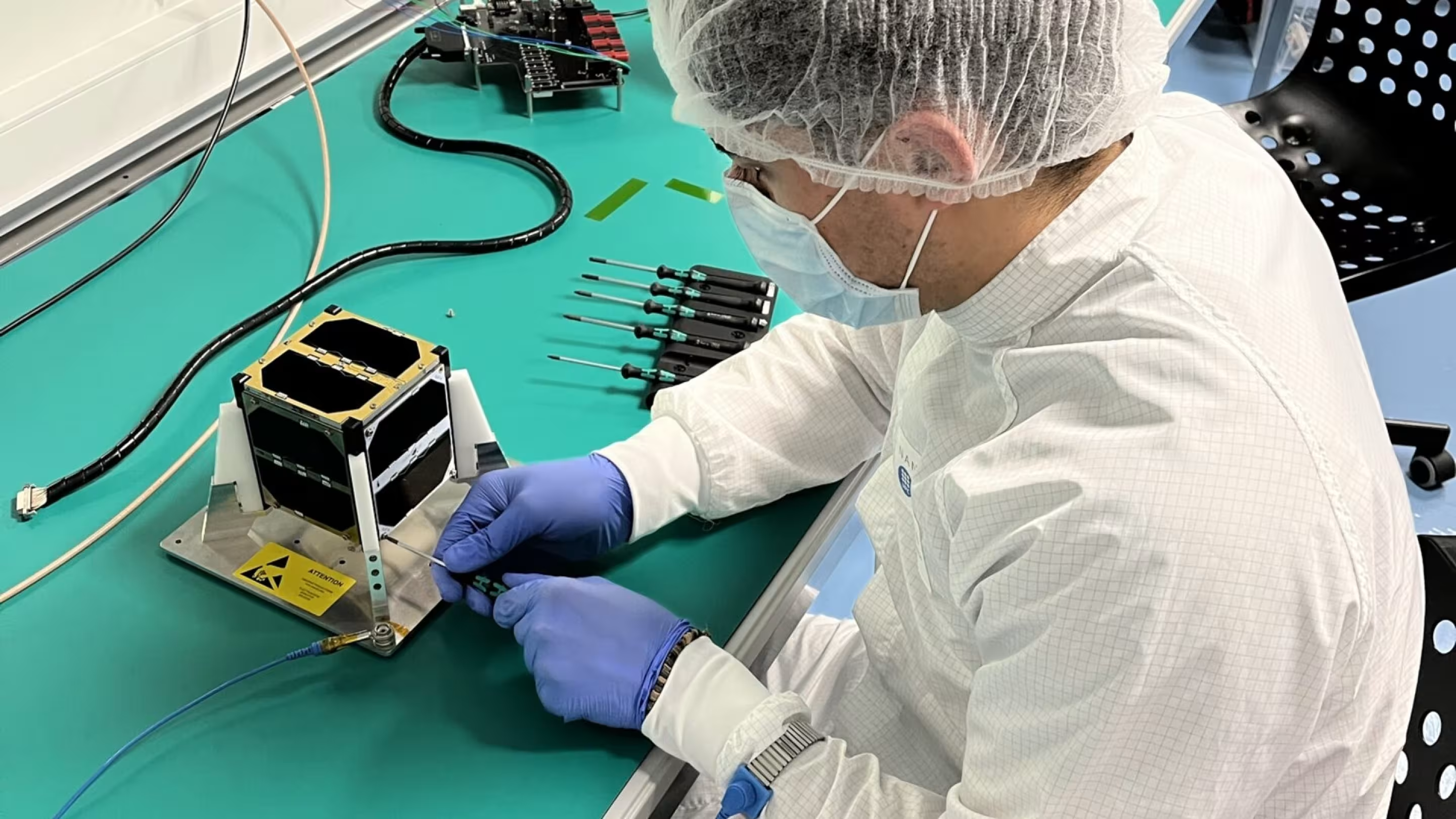
Picture ©ESA. 3Cat4 student working on CubeSat.
The SpacEconomy project’s Work Package 2 focuses on strengthening space-related education. We are pleased to share that significant progress has already been made during this year. Developments have taken place both in expanding short-term course offerings and in building more long-term educational pathways for the future.
A key milestone was the successful pilot of the first jointly organized course between higher education institutions. The University of Turku delivered the Introduction to Space Activities course, offering students the opportunity to earn 3–5 ECTS credits. The course featured guest lecturers from Tampere University, Aalto University, the University of Helsinki, and VTT, highlighting strong national collaboration.
The course attracted impressive interest: 194 students enrolled, of whom 132 completed the course. Among those who completed it, 26 pursued the extended 5-credit option. In addition, 38 participants followed the course without completing it for credits. The course provided a comprehensive overview of space activities, covering topics such as the history of space, Earth observation applications, positioning technologies, and the use of different orbital regimes.
At Tampere University, another important step was taken by launching the world’s first educational collaboration utilizing the EU Space Academy learning environment. In the Fundamentals of Space Economy course, students engaged with interdisciplinary educational resources developed at the European level. The course also gained visibility through coverage by EUSPA (read the article here). It attracted strong interest, with 85 enrolled students and 27 students completing the course. The course will be offered again in autumn 2026 to students at Tampere University, as well as to those in the FITech network and the SpacEconomy cross-studying network.
Interdisciplinary space education in Finland is also being strengthened through a newly established cross-institutional study network. The SpacEconomy cross-studying network currently includes six universities and two universities of applied sciences. Its aim is to enhance multidisciplinary learning opportunities by enabling students to access courses offered by other institutions. Each participating institution defines its own course offerings, student quotas, and target groups. From autumn 2026 onwards, students will be able to apply for courses through their own institutions’ study systems (Sisu or Peppi). The network is open to additional Finnish higher education institutions.
In the near future, Aalto University will offer students from other universities the opportunity to explore student satellite development through an open summer course based on the ForeSail EduSat CubeSat platform. In addition, Aalto will organize a Capstone course in collaboration with ICEYE during the autumn term, focusing on project-based learning in an industry collaboration context. Aalto University also provides master’s-level education in space technology through the Space Science and Technology major and participates in international double degree programmes such as SpaceMasters and Cold Climate Engineering.
Looking ahead, several new initiatives are under preparation. The University of Helsinki is planning to organize a space education symposium together with the EU-funded project AEROFUSE, adjacent with the Winter Satellite Workshop in January 2027. In addition, the University of Helsinki is developing a MOOC on space data, expected to be published in early 2027. Furthermore, a new Master’s-level programme in space technology and environmental monitoring is being planned for the University of Turku's Pori campus Space Lab.
Step by step, the SpacEconomy project is building a stronger skills base for the Finnish space sector through collaboration across institutions and disciplines.