Satellite observations help monitor mining activity
A recent study published by the Finnish Meteorological Institute sheds additional light on nitrogen oxide (NOx) emissions at open-pit mines in Mongolia and Inner Mongolia, China. The mines produce copper, rare earth metals, coal, and gold.
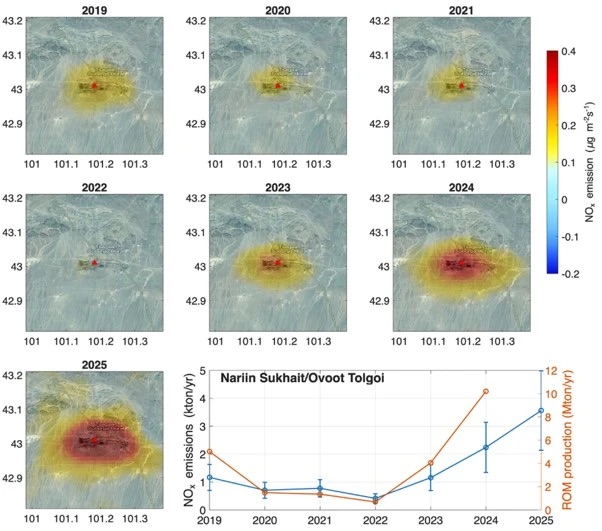
The study shows, among other things, that NOx emissions increased significantly at Mongolia’s Tavan Tolgoi and Nariin Sukhait/Ovoot Tolgoi coal mines after 2022.
The increased NOx emissions at Mongolia’s coal mines corresponded well with the reported production data, and a strong correlation was observed between NOx emissions and production. NOx emissions related to mining operations are generated, among other things, from diesel-powered vehicles and machinery. The produced coal was mainly exported to China.
In the future, the method will benefit the monitoring of the electrification of open-pit mines
The mining industry is developing rapidly worldwide, which is why monitoring its operations and the associated emissions is increasingly important to support sustainable development.
Openly available remote sensing data help monitor mining activities, especially in areas where other information is scarcely available.
“For the mines of some countries, production data is hardly available, and for example even information about the location of the mines is missing. In the study, several new mines were found with the help of satellite observations, about which there was previously only little public information,” says Janne Hakkarainen, a senior researcher at the Finnish Meteorological Institute.
In the future, openly available satellite observations could be utilized, for example, for the systematic monitoring of the electrification of open-pit mines.
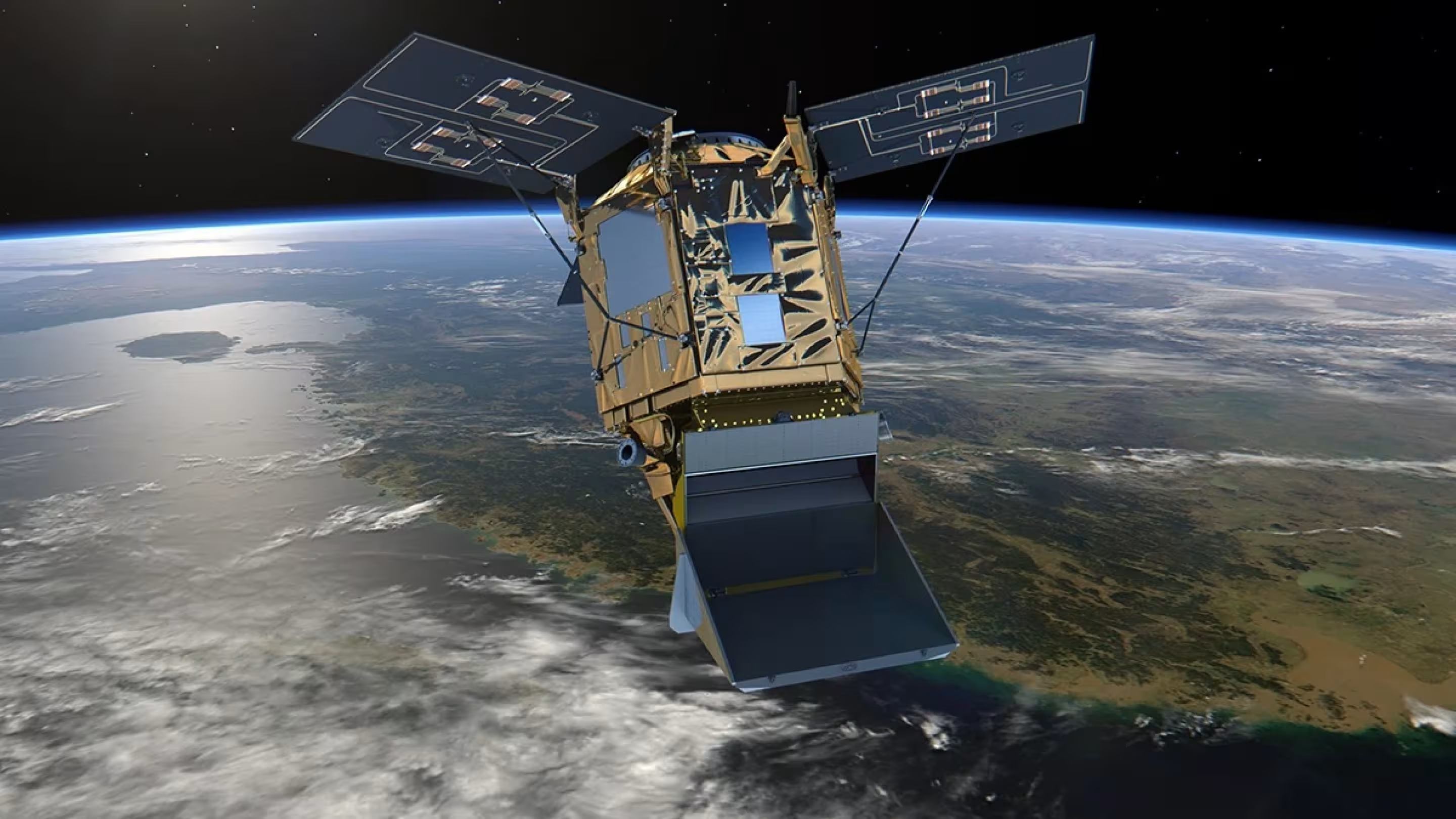
The study was carried out at the Finnish Meteorological Institute in cooperation with researchers from Rovjok and the Chinese Academy of Sciences. In the study, NOx emissions were estimated using nitrogen dioxide (NO2) observations from the TROPOMI instrument on the Copernicus Sentinel-5P satellite. In addition, images from the Sentinel-2 satellite were utilized.
Kiinnostavaa samasta aihepiiristä – other intheresting posts